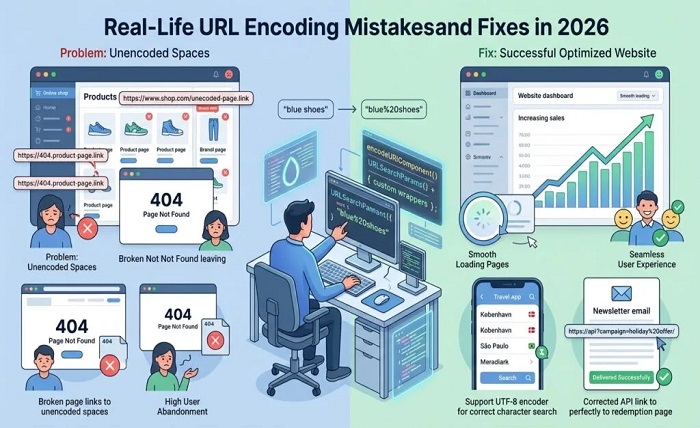
A url decoder spellmistake refers to an error that occurs when a URL decoding process is affected by incorrect spelling, malformed characters, or improperly encoded text. URLs often contain encoded characters that browsers and applications decode to display readable content. When a url decoder spellmistake happens, the decoding process may produce incorrect results, broken links, or inaccessible web pages.
Understanding a url decoder spellmistake is important for web developers, SEO professionals, digital marketers, and everyday internet users. Even a small spelling error in an encoded URL can create major navigation issues and negatively impact user experience.
A typical url decoder spellmistake may involve misplaced symbols, incorrect percent encoding, or accidental changes to URL parameters. Identifying these mistakes early helps maintain website functionality and ensures visitors reach the intended destination.
How URL Decoding Works
To understand a url decoder spellmistake, it is necessary to understand URL decoding itself. URL encoding converts special characters into a format that can be safely transmitted over the internet. For example, spaces are often represented as %20.
When a browser receives an encoded URL, it performs a decoding operation. This process transforms encoded values back into readable text. A url decoder spellmistake can interrupt this conversion and cause unexpected outputs.
For example:
Encoded URL:
https://example.com/search?q=url%20decoder
Decoded URL:
https://example.com/search?q=url decoder
If someone introduces a url decoder spellmistake by altering %20 to %2G, the browser may fail to interpret the encoded value correctly. This can result in broken functionality or invalid requests.
Modern web applications depend heavily on proper URL decoding, making it essential to avoid any url decoder spellmistake that could disrupt communication between browsers and servers.
Common Causes of URL Decoder Spellmistake
Several factors contribute to a url decoder spellmistake. Understanding these causes can help users prevent future issues and troubleshoot existing problems more efficiently.
One common cause of a url decoder spellmistake is human error. Developers may accidentally mistype encoded values while manually editing URLs. A single incorrect character can invalidate an entire URL.
Another frequent source of a url decoder spellmistake is copy-and-paste mistakes. During content migration or website updates, encoded strings may be altered unintentionally, causing decoding failures.
Software bugs can also generate a url decoder spellmistake. Some applications incorrectly encode special characters, leading to malformed URLs that cannot be decoded properly.
Data corruption during transmission is another possibility. Although less common, corrupted URL strings can introduce a url decoder spellmistake that prevents successful decoding.
Language and character set mismatches may also trigger a url decoder spellmistake, particularly when handling international content or multilingual websites.
Why URL Decoder Spellmistake Matters for SEO
A url decoder spellmistake can have a significant impact on search engine optimization. Search engines rely on properly formatted URLs to crawl, index, and rank web pages effectively.
When a url decoder spellmistake creates inaccessible pages, search engine bots may encounter crawling errors. This can reduce the visibility of important content and negatively affect rankings.
Broken URLs resulting from a url decoder spellmistake often lead to poor user experience. Visitors who encounter error pages are more likely to leave the site, increasing bounce rates and reducing engagement metrics.
Duplicate content issues can also arise from a url decoder spellmistake. Different versions of the same URL may be interpreted as separate pages, causing indexing confusion.
Furthermore, a url decoder spellmistake may disrupt tracking parameters used in marketing campaigns. This can make it difficult to measure traffic sources accurately and evaluate campaign performance.
For SEO professionals, monitoring and correcting every url decoder spellmistake is an essential part of maintaining website health and search visibility.
How to Identify URL Decoder Spellmistake Issues
Detecting a url decoder spellmistake requires a combination of manual inspection and automated tools. The sooner the issue is identified, the easier it is to resolve.
Start by examining the URL carefully. Many instances of url decoder spellmistake involve visible abnormalities such as invalid percent symbols, unusual characters, or incomplete encoding sequences.
Online URL decoding tools can help identify a url decoder spellmistake by comparing encoded and decoded outputs. If the decoded result appears incorrect, there may be an encoding problem.
Browser developer tools are also useful for diagnosing a url decoder spellmistake. Network logs often reveal malformed requests and decoding failures.
Server logs provide valuable information when investigating a url decoder spellmistake. Error entries may indicate specific URLs that failed to decode properly.
Website auditing software can scan large numbers of URLs and detect potential url decoder spellmistake patterns across an entire site.
Regular monitoring helps organizations identify and resolve a url decoder spellmistake before it affects users or search engine rankings.
Best Methods to Fix URL Decoder Spellmistake
Correcting a url decoder spellmistake typically involves identifying the faulty encoded sequence and replacing it with the correct value.
The first step in fixing a url decoder spellmistake is validating the URL against standard encoding rules. Every special character should use proper percent encoding where required.
Developers should use trusted libraries and frameworks to minimize the risk of a url decoder spellmistake. Automated encoding functions are generally more reliable than manual editing.
Testing is crucial when resolving a url decoder spellmistake. After making corrections, verify that the URL decodes correctly and directs users to the intended destination.
If a url decoder spellmistake affects multiple pages, implementing redirects may help preserve traffic and prevent broken links.
Regular code reviews can reduce the likelihood of introducing a url decoder spellmistake during development. Team members should verify URL handling logic before deployment.
Documenting URL standards within an organization also helps prevent recurring url decoder spellmistake issues and promotes consistency across projects.
Tools That Help Prevent URL Decoder Spellmistake
Many tools can assist with preventing a url decoder spellmistake and maintaining accurate URL formatting.
Online URL encoders and decoders are among the most popular solutions. These tools allow users to verify encoding accuracy and identify any url decoder spellmistake before publishing content.
Web development frameworks often include built-in functions designed to eliminate url decoder spellmistake risks. Using these functions consistently reduces human error.
SEO auditing platforms can detect issues related to a url decoder spellmistake and provide recommendations for improvement.
Code validation tools are another valuable resource. They help developers identify malformed URLs and potential url decoder spellmistake occurrences during testing.
Automated testing systems can continuously check website functionality and alert administrators when a url decoder spellmistake affects navigation or page accessibility.
Investing in reliable URL management tools is one of the most effective ways to avoid a url decoder spellmistake and ensure long-term website stability.
Tips to Avoid URL Decoder Spellmistake in the Future
Preventing a url decoder spellmistake requires proactive planning and adherence to best practices.
Always use automated encoding functions rather than manually editing encoded strings. This significantly reduces the chance of introducing a url decoder spellmistake.
Perform regular website audits to identify any emerging url decoder spellmistake issues before they become widespread.
Train development teams on URL encoding standards and common causes of url decoder spellmistake problems.
Implement quality assurance procedures that include URL validation testing. Thorough testing helps catch a url decoder spellmistake before deployment.
Maintain consistent URL structures throughout the website. Consistency makes it easier to identify and correct a url decoder spellmistake when one occurs.
Monitor analytics and server logs regularly. Unexpected errors or traffic drops may indicate a hidden url decoder spellmistake affecting website performance.
By following these recommendations, organizations can minimize the risk of a url decoder spellmistake and provide a better experience for users and search engines alike.
Conclusion
A url decoder spellmistake may seem like a minor issue, but it can have significant consequences for website functionality, user experience, and SEO performance. Whether caused by manual errors, software bugs, or incorrect encoding practices, a url decoder spellmistake can lead to broken links, inaccessible content, and lost traffic.
Understanding how URL decoding works is the first step toward preventing a url decoder spellmistake. By using reliable tools, following encoding standards, conducting regular audits, and implementing proper testing procedures, website owners can maintain clean and functional URLs.
Ultimately, preventing a url decoder spellmistake helps ensure smooth navigation, better search engine visibility, and a more reliable online presence.
FAQs
1. What does url decoder spellmistake mean?
A url decoder spellmistake refers to an error caused by incorrect spelling, malformed encoding, or invalid characters during the URL decoding process.
2. Can a url decoder spellmistake affect SEO?
Yes, a url decoder spellmistake can create broken links, crawling issues, and indexing problems that negatively impact SEO performance.
3. How can I identify a url decoder spellmistake?
You can detect a url decoder spellmistake using URL validation tools, browser developer tools, server logs, and SEO auditing software.
4. What causes a url decoder spellmistake?
Common causes of a url decoder spellmistake include manual typing errors, copy-paste mistakes, software bugs, and incorrect encoding practices.
5. How do I prevent a url decoder spellmistake?
To prevent a url decoder spellmistake, use automated encoding tools, validate URLs regularly, conduct testing, and follow URL formatting standards.