
Every website owner wants more traffic. But most people guess at what their audience is searching for. That’s where keyword research services come in handy. These services take the guesswork out of content planning. They show you exactly what people type into Google. And once you know that, you can create content that actually gets found.
What Are Keyword Research Services, Really?
Keyword research services help businesses find the right words and phrases their customers use online. A good agency or freelancer studies search volume, competition, and buyer intent. They turn raw data into a plan you can actually use. Think of it like a treasure map. You know there’s gold (traffic) out there. Keyword research services just show you where to dig.
Many small business owners try to do this alone. They pick words that sound right but never check if anyone actually searches for them. This wastes time and money. Professional keyword research services fix that problem from day one.
How These Services Actually Work
Most keyword research services follow a simple process. First, they learn about your business and your goals. Then they dig into your industry to find gaps and opportunities.

A typical workflow looks like this:
| Step | What Happens | Why It Matters |
|---|---|---|
| 1. Discovery | Understand your business, audience, and goals | Sets the direction for everything else |
| 2. Seed Keywords | List broad topics related to your niche | Gives the research a starting point |
| 3. Expansion | Use tools to find related and long-tail terms | Uncovers hidden opportunities |
| 4. Competitor Analysis | Check what rivals rank for | Reveals gaps you can fill |
| 5. Filtering | Sort by volume, difficulty, and intent | Keeps only the terms worth chasing |
| 6. Reporting | Deliver a clear, organized keyword list | Gives you a ready-to-use action plan |
This table shows why the process takes time. Skipping steps leads to weak results. A rushed keyword list rarely brings real traffic.
Why Your Business Needs Keyword Research Services
You might wonder if this step is really necessary. The short answer is yes, especially if you want steady, free traffic from search engines.
It Saves You From Wasting Content Budget
Writing blog posts takes time and money. Without proper research, you might write about topics nobody searches for. Keyword research services make sure every article has a real audience waiting for it.
It Helps You Understand Your Customers Better
Search terms reveal what people actually want. If your customers keep searching “affordable dog training near me,” that tells you something about their budget and needs. This insight goes beyond SEO. It shapes your whole marketing message.
It Gives You an Edge Over Competitors
Most small businesses skip proper research. They just guess. When you use expert keyword research services, you already have an advantage before you write a single word.
Picking the Right Keyword Research Services for Your Business
Not all services are the same. Some focus only on volume, ignoring whether the traffic actually converts into sales. Others go deeper and study buyer intent, which matters much more in the long run.
Here’s what to look for when choosing a provider:
- Experience in your industry. A service familiar with your niche understands your customers faster.
- Clear reporting. You should get simple, readable reports, not confusing spreadsheets full of jargon.
- Focus on intent, not just volume. A keyword with lower searches but high buyer intent often beats a popular but vague term.
- Ongoing support. Search trends change. The best keyword research services check back and update your list over time.
Ask for a sample report before you commit. This shows you exactly how the provider organizes and presents data.
Added Some Keyword Research Tools Worth Knowing
Good keyword research services rely on more than instinct. They use trusted tools to gather accurate data. Let’s look at a few popular ones and what makes each useful.
Google Keyword Planner
This free tool comes straight from Google. It shows search volume ranges and suggests related terms. Many keyword research services use it as a starting point because the data comes directly from the source.
Ahrefs
Ahrefs gives detailed keyword difficulty scores. It also shows which pages already rank for a term, so you can study your competition closely. Many agencies pay for this tool because it saves hours of manual digging.
SEMrush
SEMrush combines keyword data with site audits and competitor tracking. It’s a favorite among agencies offering full-service keyword research services because it does more than just list keywords.
Ubersuggest
This tool works well for beginners and small budgets. It gives keyword ideas, content suggestions, and basic difficulty scores. It’s not as deep as Ahrefs, but it gets the job done for simple projects.
AnswerThePublic
This tool shows real questions people ask around a topic. It’s great for finding content ideas beyond typical keyword lists. Many writers use it to find blog topics that answer actual reader questions.
Each tool has strengths and weaknesses. That’s why professional keyword research services often combine two or three tools instead of relying on just one.
Long-Tail Keywords: The Secret Many People Miss
Short keywords like “shoes” get huge search volume. But they’re also brutally competitive. Long-tail keywords like “best running shoes for flat feet” get fewer searches but bring in visitors who are ready to buy.
Good keyword research services always balance both types. They mix a few competitive short terms with dozens of specific long-tail phrases. This approach builds steady traffic over time instead of chasing one impossible goal.
Real Example
Imagine a small bakery in Austin. Targeting “bakery” alone means competing with thousands of sites. But targeting “gluten-free birthday cakes in Austin” brings fewer visitors, yet those visitors are far more likely to order a cake. This is the power good keyword research services unlock.
Common Mistakes Businesses Make Without Proper Research
Many businesses jump into content creation without checking data first. Here are mistakes that keyword research services help you avoid.
Chasing high-volume keywords only. Popular terms often come with fierce competition. Ranking for them can take years without proper strategy.
Ignoring search intent. Some keywords look great on paper but don’t match what your business actually offers. A mismatch here wastes clicks and confuses visitors.
Forgetting local keywords. Local businesses often skip location-based terms. This means missing out on nearby customers who are ready to visit or buy right away.
Never updating the keyword list. Search trends shift throughout the year. A list that worked last year might already feel outdated today.
How Keyword Research Services Support Long-Term SEO Growth
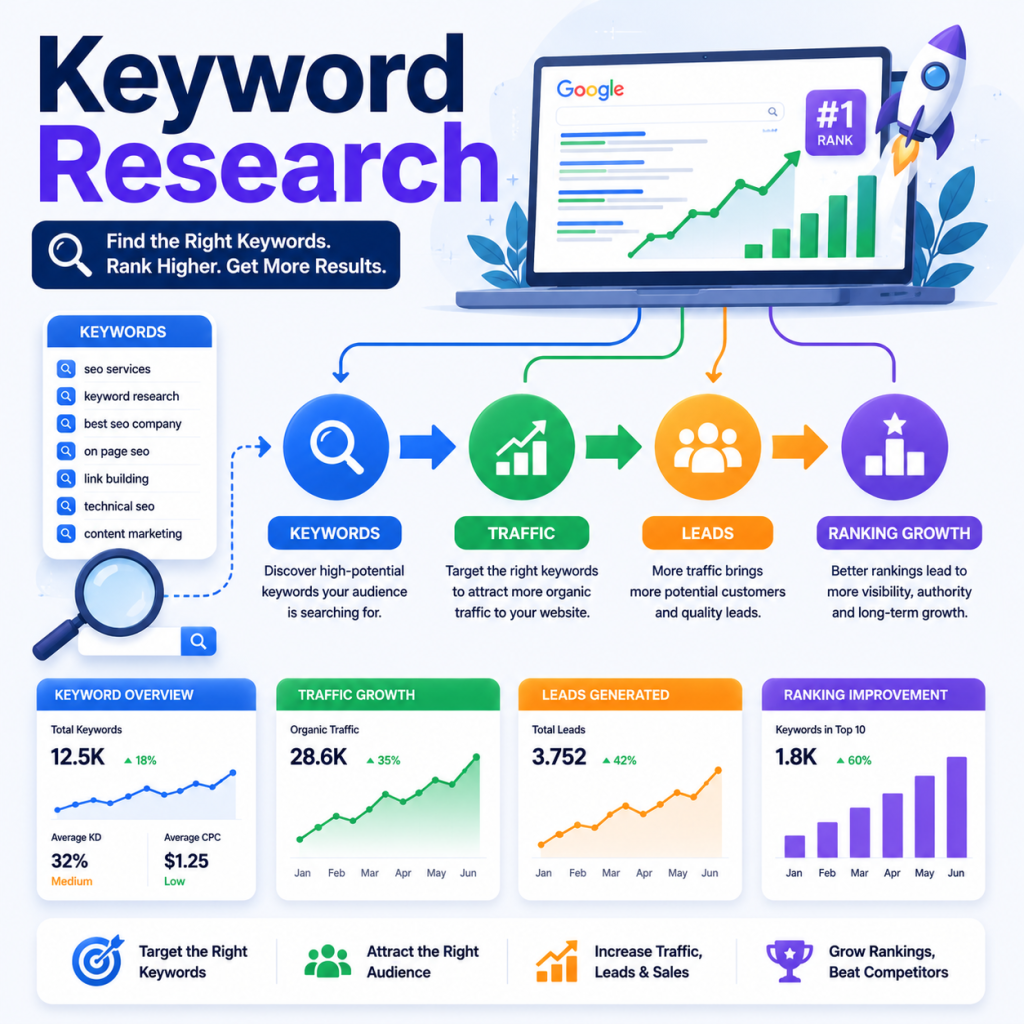
SEO isn’t a one-time task. It’s an ongoing process that needs fresh direction. Keyword research services provide that direction month after month. As your website grows, new opportunities appear. Maybe a competitor drops out of a top ranking spot. Maybe a new trend brings fresh search terms nobody targeted before. Regular research keeps your content strategy sharp and current.
This is also where keyword research services help you plan a content calendar. Instead of guessing what to write next, you follow a data-backed roadmap. Every blog post has a clear purpose and target audience from day one.
What Results Can You Expect?
Results vary depending on your industry and competition level. But most businesses notice a few common wins after using proper keyword research services.
You’ll likely see:
- More organic traffic within three to six months
- Higher quality leads who already want what you offer
- Better content ideas that match real search demand
- A clearer understanding of your audience’s language and needs
Patience matters here. SEO takes time to build momentum. But the foundation from solid keyword research services makes every future effort work harder and faster.
Faqs About Keyword Research Services
What do keyword research services actually include?
Most services include finding relevant search terms, checking competition levels, and studying buyer intent. You typically get a detailed report with recommended keywords for your website. Many providers also offer ongoing updates as trends change.
How much do keyword research services usually cost?
Prices vary widely based on the provider and project size. Freelancers might charge a flat fee, while agencies often bill monthly for ongoing research. Expect costs to range from a few hundred to a few thousand dollars depending on scope.
Can I do keyword research myself instead of hiring someone?
Yes, free tools like Google Keyword Planner and Ubersuggest let you start on your own. However, professional keyword research services often uncover deeper insights and save significant time. It depends on your budget and how much time you can dedicate to learning the process.
How often should keyword research be updated?
Most experts recommend reviewing your keyword strategy every three to six months. Search trends and competition change constantly throughout the year. Regular updates keep your content relevant and competitive.
Do keyword research services guarantee higher rankings?
No legitimate service can guarantee specific rankings, since search engines control that process. However, good keyword research services significantly improve your chances by targeting realistic, high-value terms. They build a stronger foundation for your overall SEO efforts.
Final Thoughts
Keyword research services aren’t just a nice extra. They’re the foundation of any content strategy that actually works. Without proper research, you’re writing blindly and hoping for the best. With the right approach, tools like Ahrefs, SEMrush, and Google Keyword Planner turn guesswork into a clear plan. Combine that with expert analysis from keyword research services, and you get content built on real demand instead of assumptions.
Whether you’re a small local bakery or a growing online store, the right keywords guide every decision you make. Start with solid research, and the rest of your SEO strategy becomes much easier to build.